Agricultural
Machinery
Mechanic
Tasks and Responsibilities
Agricultural Machinery Mechanics maintain and repair agricultural vehicles, machines, and equipment. They perform service work, modify agricultural machinery, and manufacture spare parts.
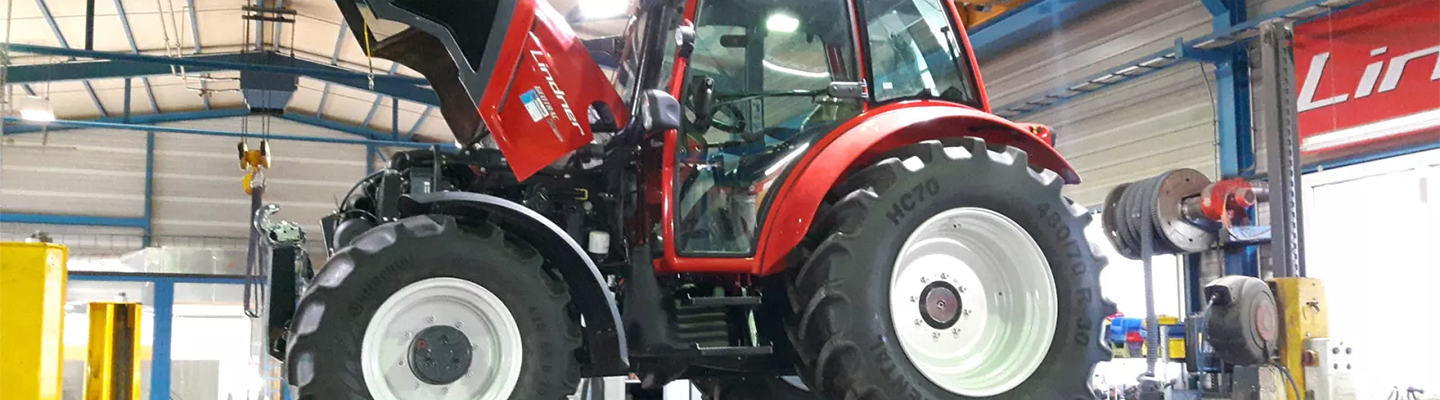
Agricultural Machinery Mechanics service and repair machinery and equipment used in agricultural technology. This includes, for example, tractors, transport vehicles, plows, sowing and harvesting machines, hay blowers, fertilizer spreaders, balers, motor mowers, and more. Many of these machines are complex high-tech devices with electronic controls. Agricultural Machinery Mechanics work in well-equipped workshops. They have access to power saws, drilling and grinding machines, welding equipment, lathes, special tools, and various testing and measuring devices. Often, however, they also troubleshoot and repair equipment directly on-site. During the summer and autumn harvest seasons, they spend a lot of time working in the field. When carrying out repairs, Agricultural Machinery Mechanics not only perform physically demanding tasks. They use computer-controlled diagnostic devices to detect faults in electrical, electronic, mechanical, and hydraulic systems. They consult the relevant manuals and functional diagrams. Defective or worn machine or engine components are removed, assemblies are disassembled into individual parts, cleaned, and worn parts replaced. If replacement parts are not available within a reasonable timeframe, they manufacture them themselves, using techniques such as drilling, turning, and welding. In addition to metals, they increasingly work with plastics.
Agricultural Machinery Mechanics perform inspection and service work. They check components for proper functioning, carry out engine oil changes, and, where necessary, program engine and vehicle management systems. They adjust valve clearances and check the braking system for full functionality. Depending on customer requirements, they are also responsible for modifying or upgrading machinery, sometimes producing custom components for this purpose. New machines are prepared for commissioning. Throughout their work, Agricultural Machinery Mechanics adhere to safety, health, and environmental protection regulations and equip machines in accordance with legal requirements.
Apprenticeship
Duration
4 years
Practical Training
In an agricultural machinery workshop
School-Based Education
1 day per week at the vocational school (shared classes with Construction Machinery and Small Engine Mechanics EFZ). Job-related subjects include: cross-disciplinary skills, regulations, length and measurement techniques, manufacturing technology, basic fluid technology, hydraulics, material science, computer science, machine elements, chassis, steering and brakes, safety and comfort, technical information, basic electrical engineering, electrical systems, internal combustion engines, mathematics / physics, and job-related practical projects. Students with excellent academic performance may attend the vocational baccalaureate school during their basic training.
Qualification
Federal VET Diploma «Agricultural Machinery Mechanic EFZ»
Requirements
Educational Background
-
Completed compulsory schooling
-
Good performance in geometry and mathematics
Skills and Competencies
-
Manual dexterity
-
Technical understanding
-
Good comprehension skills
-
Ability to work independently
-
Reliability and sense of responsibility
-
Good health and physical fitness
-
Enjoyment of customer interaction